Canadian homeowners are spending differently, designing smarter, and demanding more from their spaces than ever before. Whether you’re in a century-old Toronto semi, a suburban Oakville two-storey, or a Vancouver west-side bungalow, 2026 is shaping up to be one of the most design-conscious renovation years in recent memory — and the trends driving it say a lot about how we actually want to live.
Key Takeaways
- Warm minimalism — clean lines softened with natural materials, earthy tones, and tactile finishes — has replaced the cold, all-white aesthetic that dominated the past decade.
- Kitchens remain the highest-return renovation investment in Canada, with integrated appliances, white-oak cabinetry, and oversized islands driving the most demand in 2026.
- Bathrooms are being redesigned as personal wellness retreats, with walk-in showers, wet rooms, heated floors, and freestanding soaker tubs becoming mainstream rather than luxury.
- Outdoor living is now a year-round priority, with covered decks, outdoor kitchens, fire features, and four-season rooms extending usable square footage without structural additions.
- Smart home integration has matured from novelty to baseline expectation — invisible tech, whole-home automation, and energy-efficient systems are now standard renovation asks.
- Sustainability is no longer optional: low-VOC finishes, reclaimed and locally sourced materials, and high-performance insulation are now expected across all renovation budgets.
- Multi-functional spaces built for hybrid work, flexible entertaining, and changing family needs are among the most requested design priorities in Canadian homes this year.
Why 2026 Feels Different for Canadian Renovators
Something shifted in the Canadian renovation market as we moved into 2026. After a few years of economic uncertainty, elevated interest rates, and a housing market that made moving feel impossible, more homeowners made a deliberate decision: invest in the home you have. The result is a wave of thoughtful, intentional renovation spending — less impulsive, more considered, and firmly focused on spaces that genuinely improve daily life rather than just photograph well.
Renovation costs have also started to stabilize after years of pressure. Lower interest rates, improved supply chains, and increasing contractor availability have made 2026 a more accessible window for projects that felt financially out of reach two years ago. For Canadians who’ve been sitting on renovation plans, that combination of pent-up desire and improving market conditions is creating significant momentum.
What’s being built and redesigned, though, reflects something deeper than market timing. Canadian homeowners are asking harder questions: Does this renovation actually make my life better? Will it still feel relevant in ten years? Is it built to handle a Canadian climate, not just a Pinterest board? The answers to those questions are shaping 2026’s biggest trends.
Warm Minimalism: The End of the Cold White Box
The all-white, everything-stark interior that defined the mid-2010s has run its course. In its place, Canadian designers and homeowners are embracing what’s being called warm minimalism — the same commitment to clean, uncluttered spaces, but softened with natural materials, tactile surfaces, and colours that actually feel inhabitable.
Light wood tones are dominating cabinetry choices, with white oak, rift-cut oak, and walnut appearing in everything from full kitchen renovations to bathroom vanities. Stone surfaces — real and responsibly sourced where possible — are replacing the ubiquitous grey quartz that once covered every countertop in the country. Limewash walls, warm plaster finishes, and earthy palettes are giving interiors a depth and personality that cold grey and stark white simply couldn’t offer.
Colour is also becoming more confident. The 2026 palette in Canadian homes is trending toward deep forest greens, teal-adjacent blue-greens, warm ochres, and rich terracottas — tones that feel grounded rather than trendy, and that age in interesting ways rather than looking dated in five years. These aren’t accent walls. They’re showing up on full cabinet runs, powder rooms, and carefully chosen architectural details.
“The renovation conversations we’re having in 2026 aren’t about what looks good on Instagram. They’re about what actually makes a home feel like a home — and Canadians are getting very clear on the difference.”
Kitchens: Still the Heart, Now Smarter About It
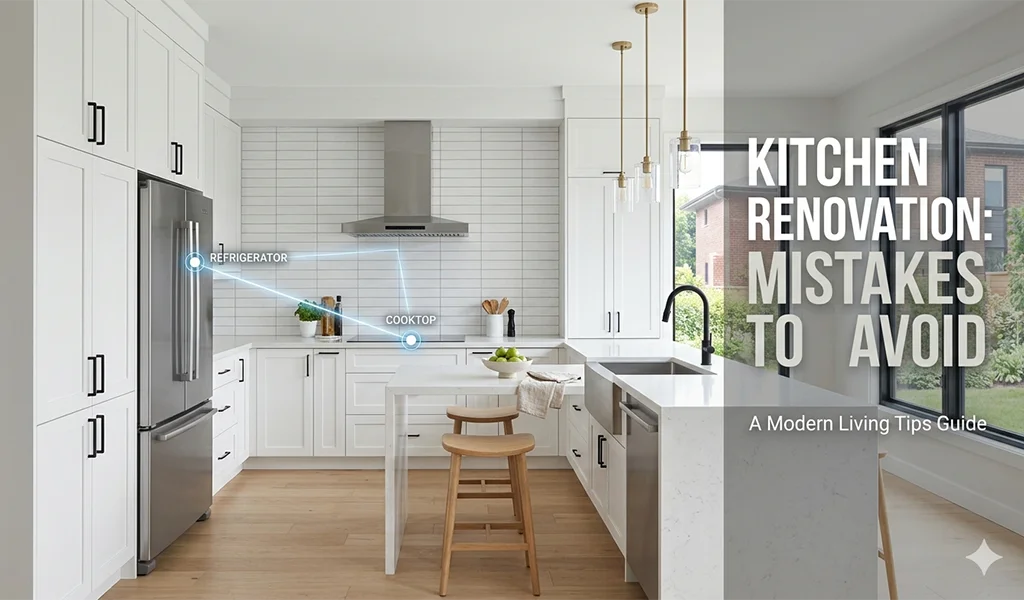
If there’s one renovation that Canadian homeowners consistently point to as both the most impactful lifestyle upgrade and the strongest return on investment, it’s the kitchen — and that hasn’t changed in 2026. What has changed is how those kitchens are being designed and what they’re being asked to do.
The modern Canadian kitchen in 2026 is designed around how families actually use it: not just cooking and entertaining, but homework, remote work, morning routines, and the chaotic overlap of all of the above. Large, generously proportioned islands are the gravitational centre of most renovation plans, serving as prep space, breakfast bar, and informal workspace simultaneously. The island isn’t a luxury addition anymore — it’s the design anchor that everything else is planned around.
Integrated and panel-ready appliances are another defining feature of 2026 kitchen renovations. Refrigerators hidden behind cabinet fronts, dishwashers that disappear into the cabinetry line, and built-in coffee stations are increasingly standard in mid-range and higher-end projects. The goal is a seamless, furniture-like appearance that reads as calm and deliberate rather than appliance-heavy and industrial.
Storage is also being reimagined with a level of precision that would have felt obsessive a decade ago. Pull-out pantry systems, deep drawer configurations, integrated recycling and composting zones, and custom millwork solutions are replacing the generic cabinet layouts that characterized the previous renovation era. In a market where square footage is at a premium, Canadians are getting much better at using every centimetre they already have.
01. Warm Minimalism
02. Spa Bathrooms
03. Year-Round Outdoor Living
04. Invisible Smart Tech
05. Multi-Use Spaces
06. Sustainable by Default
Bathrooms: From Functional Rooms to Personal Retreats
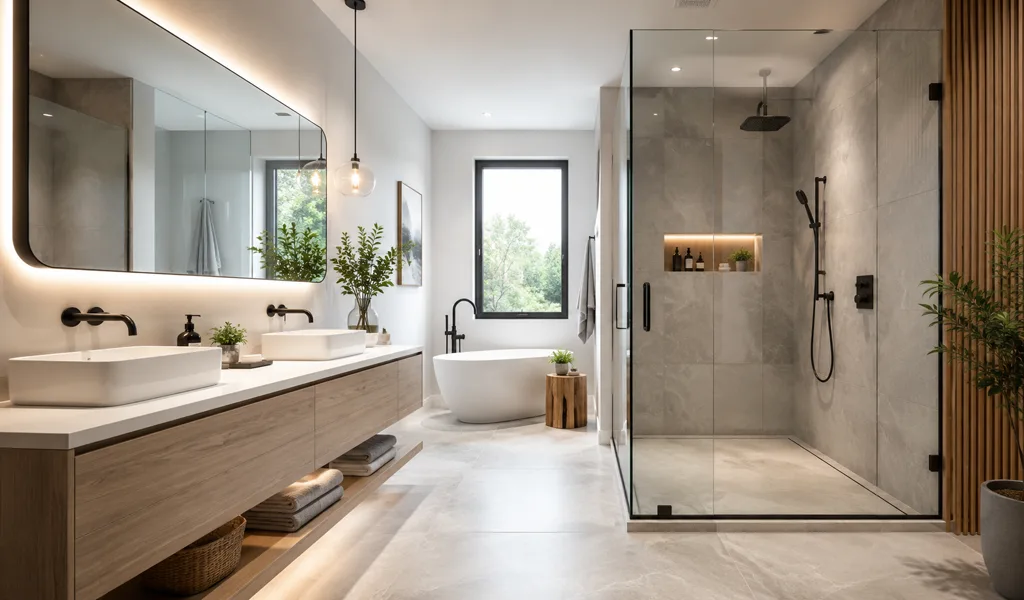
The bathroom renovation is having a significant cultural moment in Canada right now, and the driving force is straightforward: after years of prioritizing productivity, Canadian homeowners are investing in spaces designed to help them slow down. Bathrooms in 2026 are being treated not as utility rooms but as personal retreat spaces — the one place in a busy household where design genuinely serves rest and recovery.
Walk-in showers have become the dominant feature in bathroom renovations across the country, with frameless glass, large-format tiles, and generous dimensions becoming the baseline expectation rather than the premium upgrade. Wet rooms — fully waterproofed spaces where the shower and tub share a single open zone — are increasingly appearing in larger bathroom renovations, particularly in primary ensuites.
Freestanding soaker tubs are back with genuine momentum. Where they once felt like a passing aesthetic trend, they’ve earned their place as a practical wellness fixture — particularly in regions where long, cold winters make the idea of a long, hot bath feel less like indulgence and more like a reasonable coping strategy. Heated floors are no longer a luxury-tier consideration; they’re appearing in mid-range bathroom renovations across the country and are consistently rated as one of the highest-satisfaction renovation upgrades by Canadian homeowners who’ve made the investment.
Fixtures and hardware are getting more intentional attention too. Brushed brass, matte black, and warm brushed nickel have replaced the chrome-on-everything approach, and mixing metal finishes within a single bathroom — done with a considered eye — is no longer considered a design error. It’s become a signature of bathrooms that feel genuinely curated rather than showroom-generic.
Outdoor Living: Finally, Year-Round
For decades, outdoor living in Canada was treated as a seasonal gift that had to be surrendered the moment the first frost arrived. That framing is changing in 2026, and the renovation projects reflect it. Canadian homeowners — particularly those in Ontario and British Columbia — are investing in outdoor spaces designed not just for July barbecues but for March coffee and November evenings around a fire.
Covered decks with weather-resistant roofing systems are one of the most requested renovation additions this year, extending the usable season significantly without the commitment or cost of a full enclosed addition. Outdoor kitchens have grown well beyond the basic built-in grill, with full countertop runs, integrated refrigeration, and proper lighting becoming part of even mid-budget outdoor renovation plans.
Fire features — gas fireplaces, fire tables, and fire pits with surrounding seating structures — have become central to the outdoor experience rather than an afterthought, creating warmth and ambiance that makes late-season outdoor use genuinely inviting. Four-season rooms and sunrooms with retractable glass wall systems represent the high end of this trend, essentially adding a year-round living room to a property’s footprint without requiring a full structural addition. For Canadian homeowners who’ve decided they’re staying put rather than moving up, this kind of space creation offers enormous lifestyle value relative to cost.
Smart Home Technology: From Gadget to Foundation
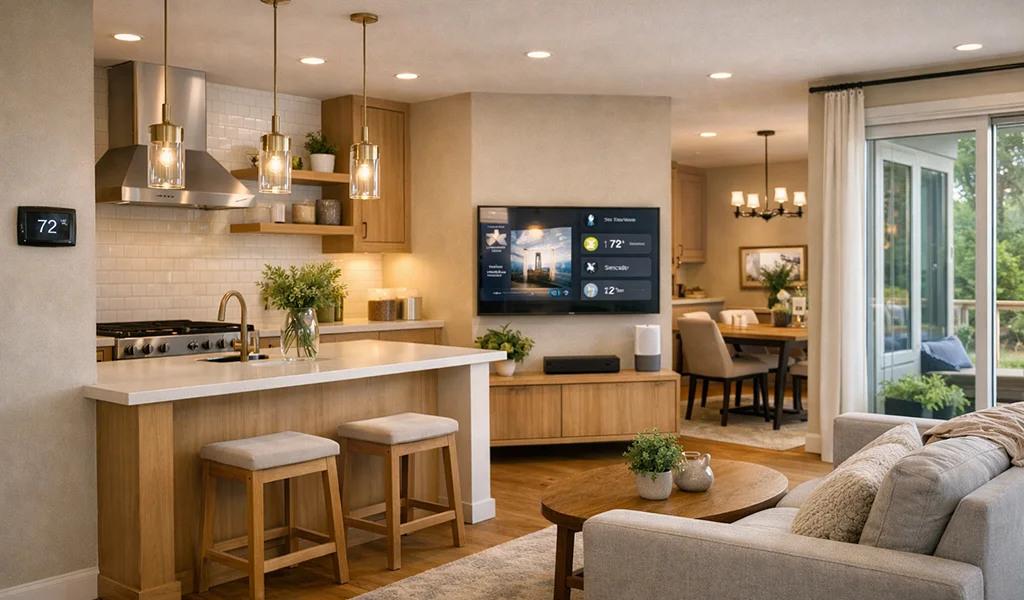
Smart home technology has been “trending” for so long that it became a bit of a renovation cliché. In 2026, though, something has genuinely changed: the technology has matured, the integration has improved, and Canadian homeowners have developed a much clearer sense of which smart features actually improve daily life and which ones create frustration.
What’s being requested now isn’t a collection of connected devices — it’s whole-home systems that work invisibly and intelligently. Smart thermostats and heated flooring systems that learn household routines and adapt accordingly. Lighting automation that adjusts to time of day, natural light levels, and the specific needs of different rooms. Integrated security systems with doorbell cameras, smart locks, and remote monitoring that feel seamless rather than tacked on. The defining phrase in 2026 smart home renovations is seamless integration — technology that disappears into the design rather than competing with it.
Energy efficiency is increasingly driving smart home investments as well. Heat pumps, both air-source and geothermal systems, are appearing in renovation projects across Ontario and British Columbia with growing frequency, driven by both environmental priorities and very practical calculations about long-term utility costs. Triple-glazed windows, high-performance insulation packages, and smart ventilation systems are being incorporated into renovations of all scales, not just high-budget luxury builds.
Sustainability: Now the Expectation, Not the Exception
The shift on sustainability in Canadian renovations over the past three years has been significant. What was once a niche priority for environmentally motivated homeowners has become a baseline expectation across the renovation market. In 2026, asking about sustainable material options, low-VOC finishes, and energy-efficient systems isn’t a specialty conversation — it’s a standard part of any credible renovation discussion.
Reclaimed wood, locally sourced stone, and responsibly harvested timber are appearing more frequently in renovation specifications, valued both for their environmental credentials and for the authenticity and character they bring to a space. Low-VOC paints, stains, and finishes have become the default rather than the premium upgrade, driven by a combination of health consciousness and the simple fact that indoor air quality in well-sealed Canadian homes matters far more than it did in the drafty houses of previous eras.
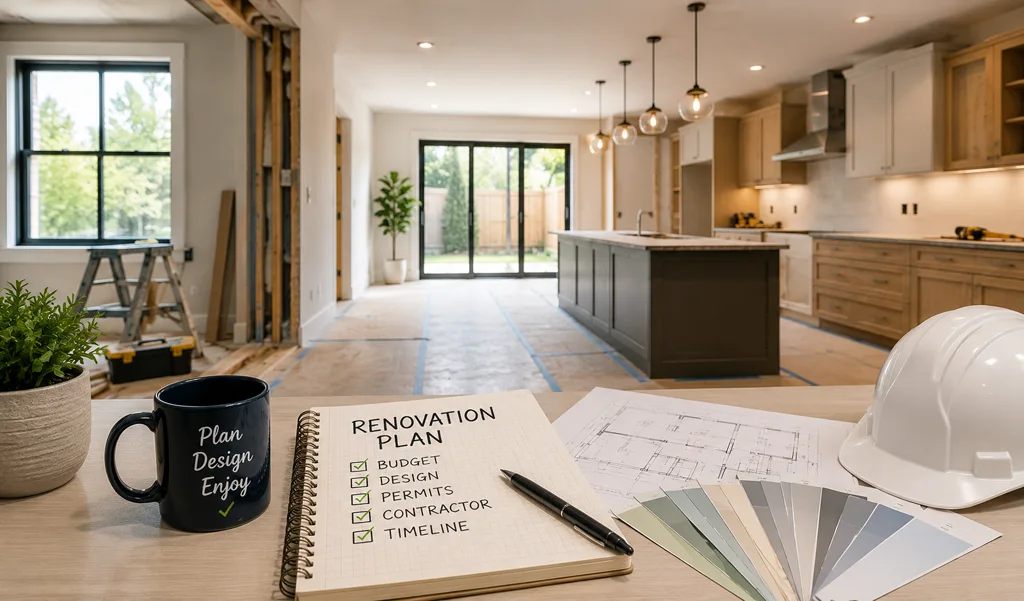
For homeowners considering renovation timelines, it’s worth noting that the winter and early spring months tend to offer better contractor availability and more competitive pricing than the peak May-to-August season. Planning renovations for the fall and winter windows — particularly for indoor projects — can yield significant savings while still achieving the same quality outcomes.
Multi-Functional Spaces and the Architecture of Flexibility
One of the most practically driven renovation trends of 2026 is the demand for spaces that do more than one thing well. The hybrid work era, combined with a housing market that makes upsizing difficult for many Canadians, has created an urgent need for homes that flex and adapt rather than lock occupants into fixed functions.
Guest rooms that convert into productive home offices. Living spaces where built-in millwork defines zones without closing off light or sightlines. Basement renovations that create separate, functional suites without sacrificing laundry, storage, and mechanical access. Garages being transformed into hybrid workshop-and-gym spaces that keep the car out but bring real daily-use value in.
The architectural language of flexibility is showing up in design details too. Curved forms — arched doorways, rounded kitchen islands, and sculptural millwork elements — are replacing the sharp, boxy forms that characterized the previous renovation aesthetic, creating spaces that feel fluid and livable rather than rigidly compartmentalized.
Finding the Right Partner for Your 2026 Renovation
What connects every one of these trends is the need for thoughtful execution. A warm minimalist kitchen that’s poorly constructed is just an expensive disappointment. A spa bathroom with inadequate ventilation becomes a mould problem. Outdoor living spaces built without attention to drainage and climate resilience fail within seasons. The quality of the renovation partner matters as much as the quality of the design vision — and in 2026, Canadian homeowners are better informed and more discerning about making that distinction.
Whether you’re planning a targeted kitchen update, a full bathroom reimagination, or a multi-room whole-home renovation, the conversation starts with finding a contractor or design-build firm that genuinely understands not just construction, but the way Canadian families live, the materials that perform in a Canadian climate, and the design language that makes a home feel considered rather than generic.
Recommended for Canadian HomeownersIf you’re planning a renovation in 2026 and want to work with a team that brings design intelligence and construction quality together under one roof, Violet Build is worth a closer look. They specialize in full-scope residential renovations designed around how Canadian families actually live — from kitchen and bathroom transformations to whole-home redesigns built for the long term.
What to Take Away From All of This
The renovation landscape in Canada in 2026 is being shaped by homeowners who have gotten more thoughtful, more discerning, and more honest about what they actually want from their spaces. The trends aren’t arbitrary aesthetic shifts — they’re responses to real changes in how Canadians work, socialize, age, and think about the long-term relationship between their homes and their quality of life.
Whether you act on one trend or several, the most durable renovation decision you can make in 2026 is the same one it’s always been: invest in quality over flash, design for how you live rather than how you hope a listing photo looks, and work with people who genuinely know what they’re doing. That combination produces homes that feel better every year rather than dating themselves in the next listing cycle.